

AusTraits
The Challenge
AusTraits is a national data asset quantifying the traits of Australia’s flora. It collects functional and structural traits (such as leaf size, potential photosynthetic rate, maximum height, floral colour, and floral symmetry) as well as capturing differences among species in their ecology, function, and evolution. These traits are crucial for advancing core research and applied outcomes in plant science.
The challenge for AusTraits was to broaden coverage of the resource and improve the quality of the data, while making it more accessible.
The Response
In phase 1 (doi.org/10.47486/DP720), the new version of AusTraits delivered:
- broadened coverage of the resource by connecting with new datasets and research communities
- improved data access using existing biodiversity platforms, including Atlas of Living Australia, and EcoCommons.
In phase 2 (2024 to 2027), AusTraits aims to:
- increase the completeness of trait data for Australian plants
- deliver new synthesised products (species average traits and geospatial trait layers)
- deploy our new workflows for aggregating trait observations for other facets of biodiversity (e.g., physiology, animal traits).
In particular, this includes:
- maintaining the
{APCalign}package for aligning and updating scientific names of Australian plants.
The new version AusTraits is:
- expanding coverage of key traits by adding data to AusTraits, with a focus on traits deemed essential for assessing species’ responses to disturbance (especially from fire), climate change (especially to drought, extreme temperatures), and reproduction (e.g. pollination traits, flower colour). All are essential for understanding the conservation status of the Australian flora
- developing new species-level and geo-spatial layers of traits for use in ecological modelling
- expanding our API or developing additional interfaces with Zenodo archives to deliver these new layers into the ALA and state herbaria
- enhancing AusTraits exposure through workshops, conference talks and one-on-one networking
- offering mentoring and guidance for teams using AusTraits and/or the
traits.buildtrait database building workflow, including national and international trait-based initiatives - continuing to develop the
traits.buildworkflow, output structure and data model - broadened coverage of the resource by connecting with new datasets and research communities
- improved data access using existing biodiversity platforms, including Atlas of Living Australia and EcoCommons.
The Outcomes
Access AusTraits, now a national database of Australian plant traits that synthesises data on 500 traits across 30,000 plant taxa.
This project has also delivered a:
- data paper
- R package
- step-by-step user guide to the
traits.builddatabase model, R package and workflow - API
- plant dictionary (accessible also via ARDC Research Vocabularies Australia).
All these resources and more can be accessed via the AusTraits website.
AusTraits has transformed our ability to understand and manage Australian vegetation. It provides tangible impacts beyond academic research by freeing up ecological data which can be used to create stronger conservation management, business investment and societal engagement with the environment.
These have led to wide-ranging impacts, including:
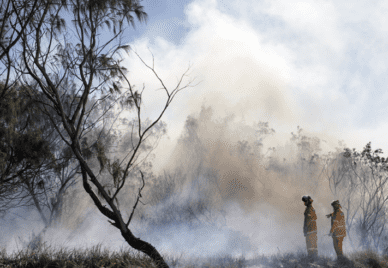
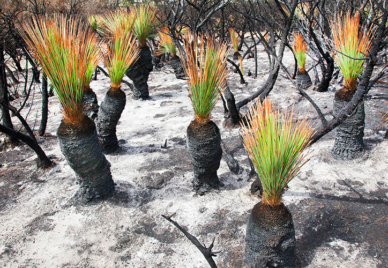
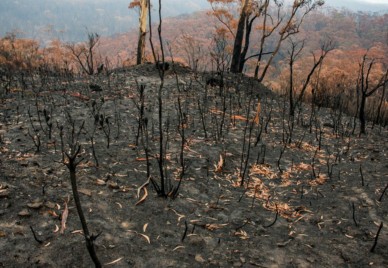
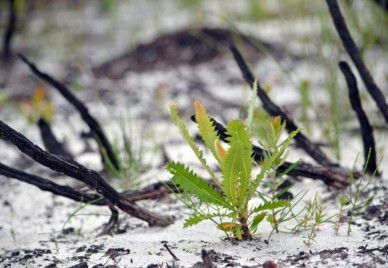
- Broadscale assessment of species vulnerability to bushfires
- Analysis of continental trends in plant function (e.g. doi.org/10.1111/nph.19478; doi.org/10.1111/nph.18993)
- Reconstructing past environments through functional trait analysis (doi.org/ 10.1038/s41559-022-01943-4)
- Global integration of trait data using the AusTraits Plant Dictionary (doi.org/10.1111/nph.18999)
- Better integration and usage of biodiversity data using APCalign (e.g. Schrader, AIslands Project, in prep; Lu-Irving, compiling list of NSW weed species, in prep)
Phase 2 intended outcomes
- Strengthening the availability and uptake of more comprehensive trait data in conservation planning and management decisions and for priority research questions in the face of climate and environmental change. This will support evidence-based decision making by government and industry.
- The species-level data and geo-spatial layers of trait data will be a synthetic and easy-to-use summary of the raw data in AusTraits and will make the trait data more accessible to researchers and the general public. This translation of raw plant trait data to synthesised outputs ensures reliable data and information products are available to form the building blocks for environmental assessments across diverse research sectors.
- Continued development and deployment of our API ensures AusTraits data can be seamlessly delivered via multiple web portals, ensuring AusTraits trait data remain easily accessible to both researchers and the general public.
- Workshops, conference talks and one-on-one networking ensure AusTraits is widely used and respected as an accurate, easy-to-use data resource.
- By offering mentoring for those building trait datasets for any organism using the traits.build workflow, we increase the number of teams using this workflow to build interoperable, fully-documented trait databases. In turn, the traits.build (AusTraits) standard becomes established as a ‘gold standard’ model among users, promoting the sharing of reliable data and information.
- Continued development of the traits.build workflow, output structure and data model ensure databases built using this workflow can be integrated into global biodiversity resources such as GBIF and meet the requirements of all teams wishing to use this workflow. Creating this reusable infrastructure promotes the sharing of data and information.
- Efficient alignment and updating of lists of scientific names to those accepted by the Australian Plant Census. The APC align hence offers a method to ensure the reliability and trustworthiness of scientific names in research on Australian plants.
Who Will Benefit
Researchers, research organisations and government agencies can benefit from:
- improved access and discoverability with AusTraits available as an open access resource via existing biodiversity platforms
- comprehensive national coverage of functional and structural traits across Australia’s flora in a unified data asset.
The Partners
Phase 2 partners are:
- UNSW (project lead)
- ARDC
- Western Sydney University
- Botanic Gardens of Sydney
- University of Melbourne
- Atlas of Living Australia
- Department of Climate Change, Energy, the Environment and Water (DCCEEW)
The partners for Phase 1 of AusTraits were:
- UNSW
- ARDC
- Macquarie University
- Royal Botanic Gardens and Domain Trust
- Centre for Australian National Biodiversity Research
- The University of Melbourne
- Western Sydney University
- EcoCommons Australia
- CSIRO
- Landcare Research New Zealand
- University of New England
- Murdoch University
- University of Arizona
- Department of Agriculture, Water and the Environment: Australian Biological Resources Study
- Parks Australia
- Atlas of Living Australia
- Arthur Rylah Institute for Environmental Research
- NSW Department of Planning, Industry and Environment
- Western Australia Department of Biodiversity, Conservation and Attractions
- Greening Australia.
Further Resources
- Visit AusTraits
- Access the AusTraits Plant Dictionary
- View the list of journal papers citing AusTraits
- Read the final project report.
Timeframe
Current Phase
ARDC Co-investment
Project lead
Categories
Related Services
Related Case Studies
Related Articles
- Inside AusTraits: How Dr Elizabeth Wenk’s Software Is Transforming Ecological Research
- Latest Updates from the Planet Research Data Commons (Feb 2026)
- Latest Updates from the Planet Research Data Commons (August 2025)
- Latest Updates from the Planet Research Data Commons (July 2025)
- Global Knowledge Inequality Threatens Ecosystems Across the Global South
- Shaping Research Software: An Interview with Fonti Kar
- Plant Trait Data Guides Australia’s Bushfire Recovery
- Dr Daniel Falster, Expert in Understanding How Forests Work